
Real value instead of illusion – why we rely on natural diamonds

ecently, we have been receiving an increasing number of questions about lab-grown diamonds – diamonds produced in a laboratory. At first glance, these appear to be a cheap alternative. But is that really the case?
Today, we would like to talk to you openly and transparently about our position and address an important issue: the true value of a diamond.
What determines the value of a natural diamond?
A natural diamond is a durable product that retains its value. At Kobler Zug, we source each diamond individually and guarantee:
- Selection from the international market
- Verifiably conflict-free origin
- Expert examination of quality, authenticity and certificate compliance
- Personal consultation and the opportunity to examine the diamond before purchase
For this service, we charge a transparent surcharge of 10–30% depending on the price range. Our goal is to offer you a certified, high-quality gemstone with long-term value.
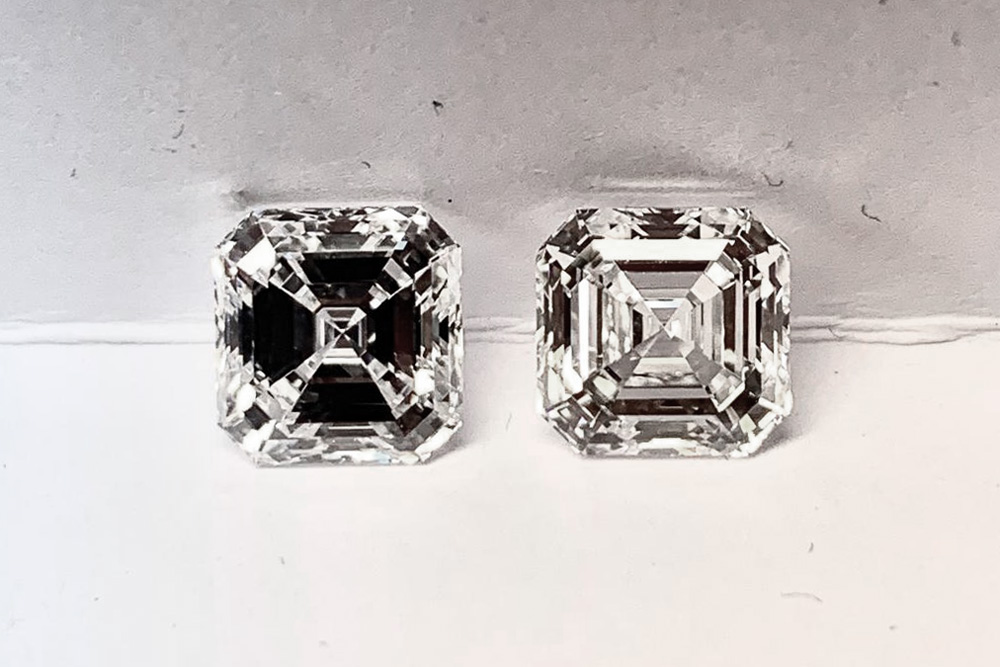
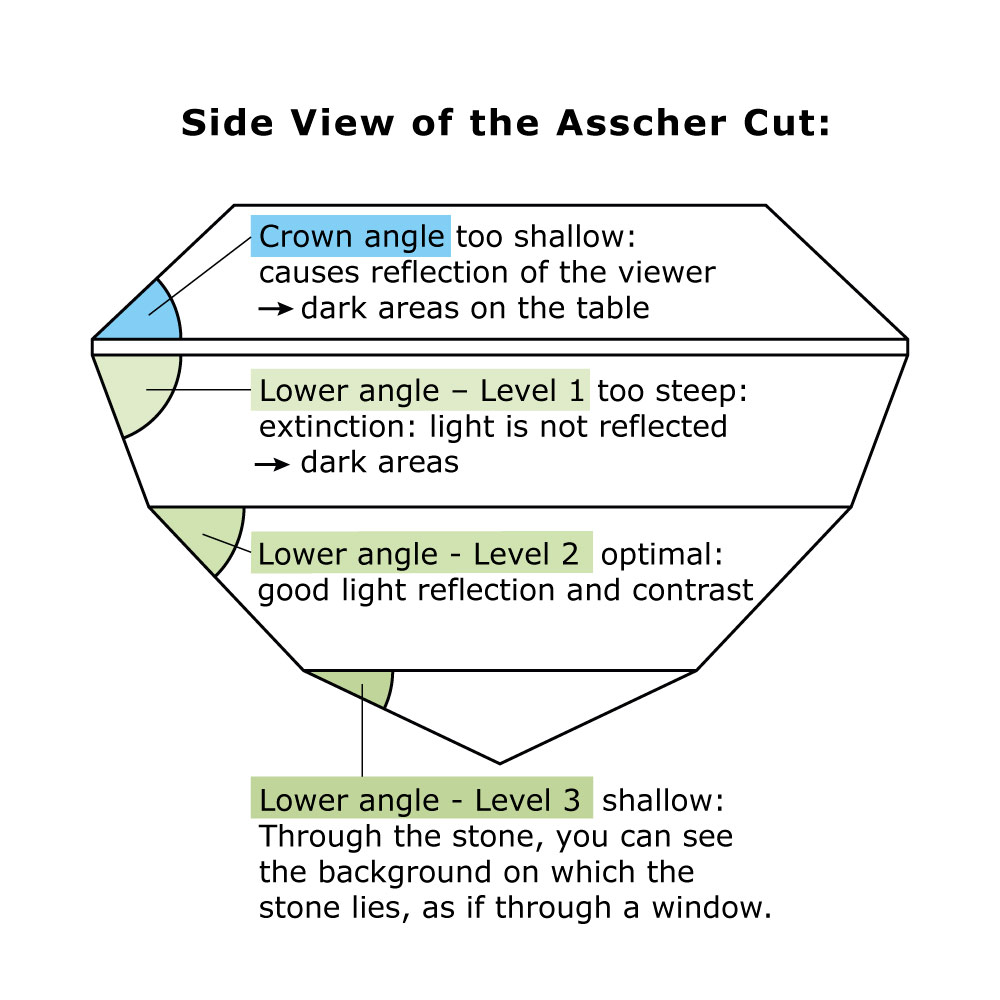
The causes of the unfavourable appearance of the left-hand Asscher cut lie in the proportions, angles and their relationships to each other. The illustration shows the most important angles and their effects on the appearance of the diamond.
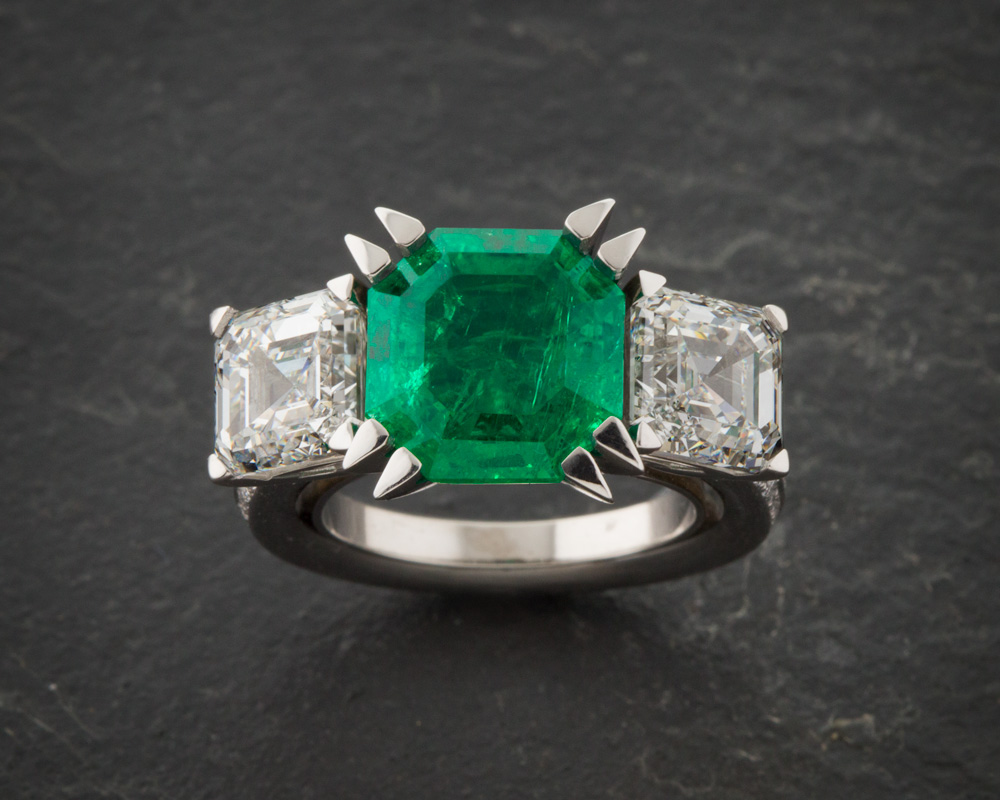
Lab-grown diamonds – a comparison of pricing structures
In contrast, lab-grown diamonds are manufactured industrially and are available in large quantities worldwide. This has a significant impact on the market price:
- Wholesale prices: currently well below USD 200 per carat in some cases (source: Hong Kong Jewellery & Gem Fair, 17–21 September 2025)
- Retail prices: often between USD 1,400 and USD 5,000 per carat (current figures for the US market – e-commerce and retail)
- Trade margins: well over 1,000%
These margins arise even though lab-grown diamonds are an increasingly affordable, reproducible industrial product – without natural scarcity or long-term value development. For example, SRF recently ran the headline:
„Diamonds even for small budgets“
A practical example from our workshop
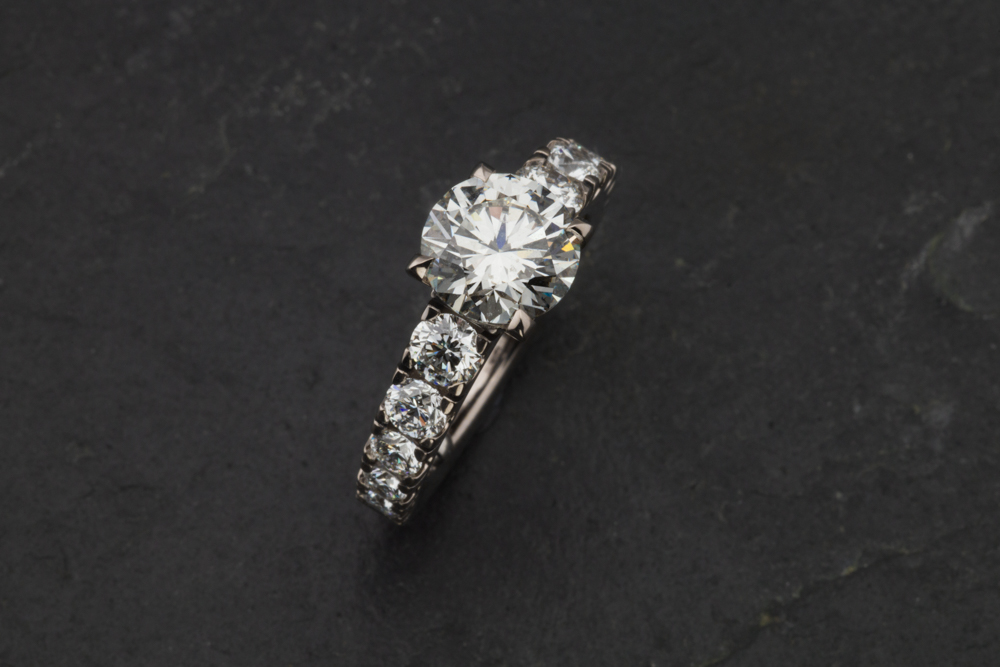
The handcrafted production of a high-quality solitaire ring in precious metal with brilliant-cut diamonds set on the sides often costs well over CHF 10,000, excluding the centre stone. We do not consider it appropriate to set a synthetic centre stone worth CHF 200 in such a piece of jewellery, neither in terms of quality nor in terms of overall value.
Our positioning
The pricing of natural diamonds is now largely transparent – even for end customers. This differs significantly from the current pricing policy for lab-grown diamonds, where consumers are often faced with inflated prices.
We would like to take this opportunity to reiterate what Kobler Zug stands for:
- Transparency in pricing
- Sustainable product selection
- Value retention across generations
Please do not hesitate to contact us if you have any questions or would like a personal consultation.